Decorative concrete in Baldwin Park CA - a finish that fits your budget and upkeep
Tired of plain gray concrete? We add color, pattern and texture at a design level that fits what you'll spend and maintain.
Decorative concrete is the finish you live with
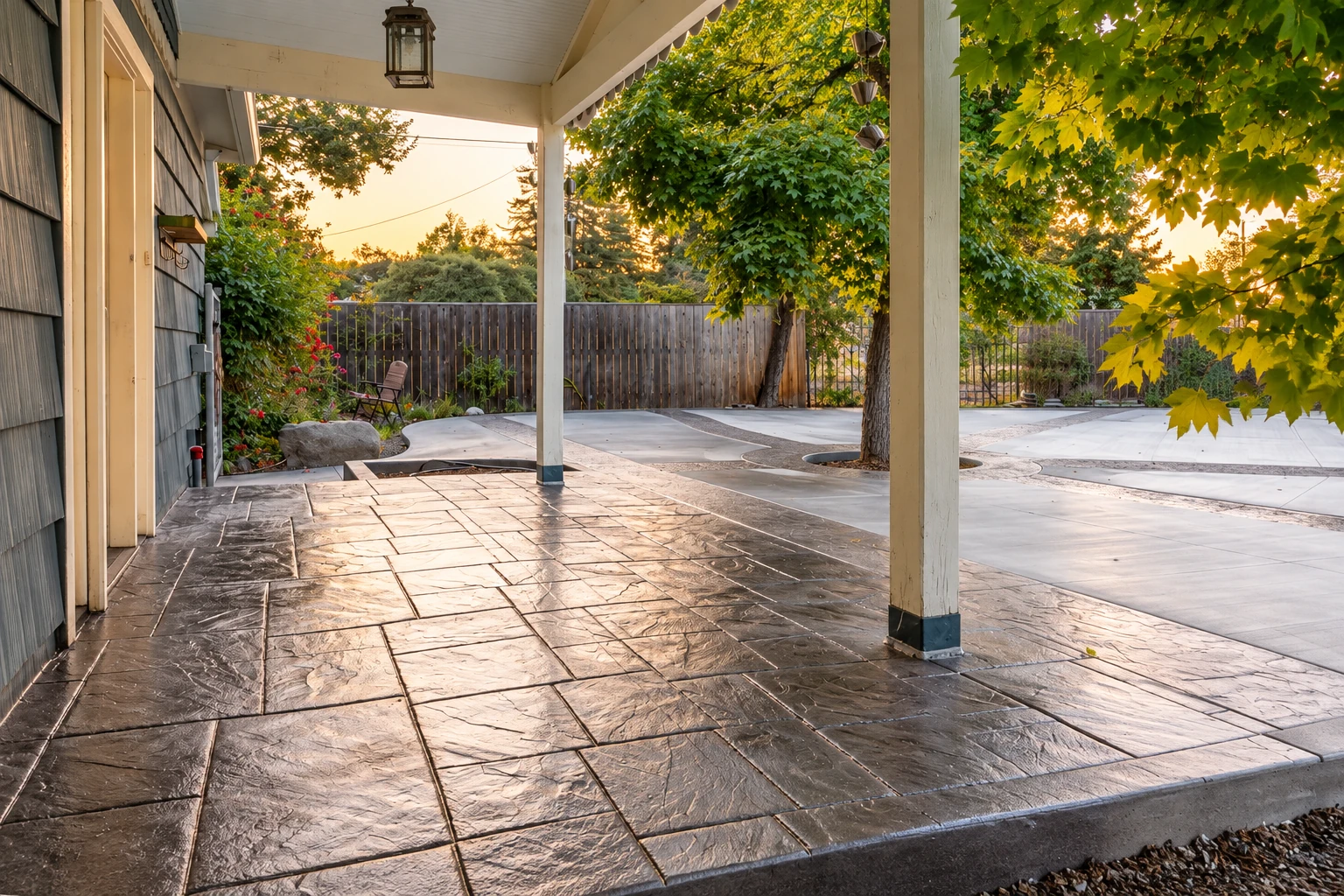
Decorative concrete is the part of the job you look at every day. Instead of a plain gray slab, we add color, chemical stains or dyes, a stamped or textured surface, polishing or a sealer, so a patio or walkway in Baldwin Park can take on the look of slate, brick or natural stone.
It isn't a separate kind of slab. It's how we finish the concrete your driveway, patio or floor already needs, so it rests on the same base work as any other pour. Stamped concrete is one kind of decorative work, where we press a pattern into the surface while it's still soft.
The price moves with the size of the area, how detailed the design gets and local rates. The schedule turns on the prep, the weather on pour day and curing, the wait while the concrete hardens before it's sealed. I walk the job with you and put in writing what's included and what isn't.
What decorative concrete can change at your house
A plain gray slab
Color goes into the concrete or onto it with chemical stains and dyes, so a driveway or patio doesn't have to stay gray. Which one we use depends on the tone you want, from an even color to a softer, mottled look.
The look of stone or brick
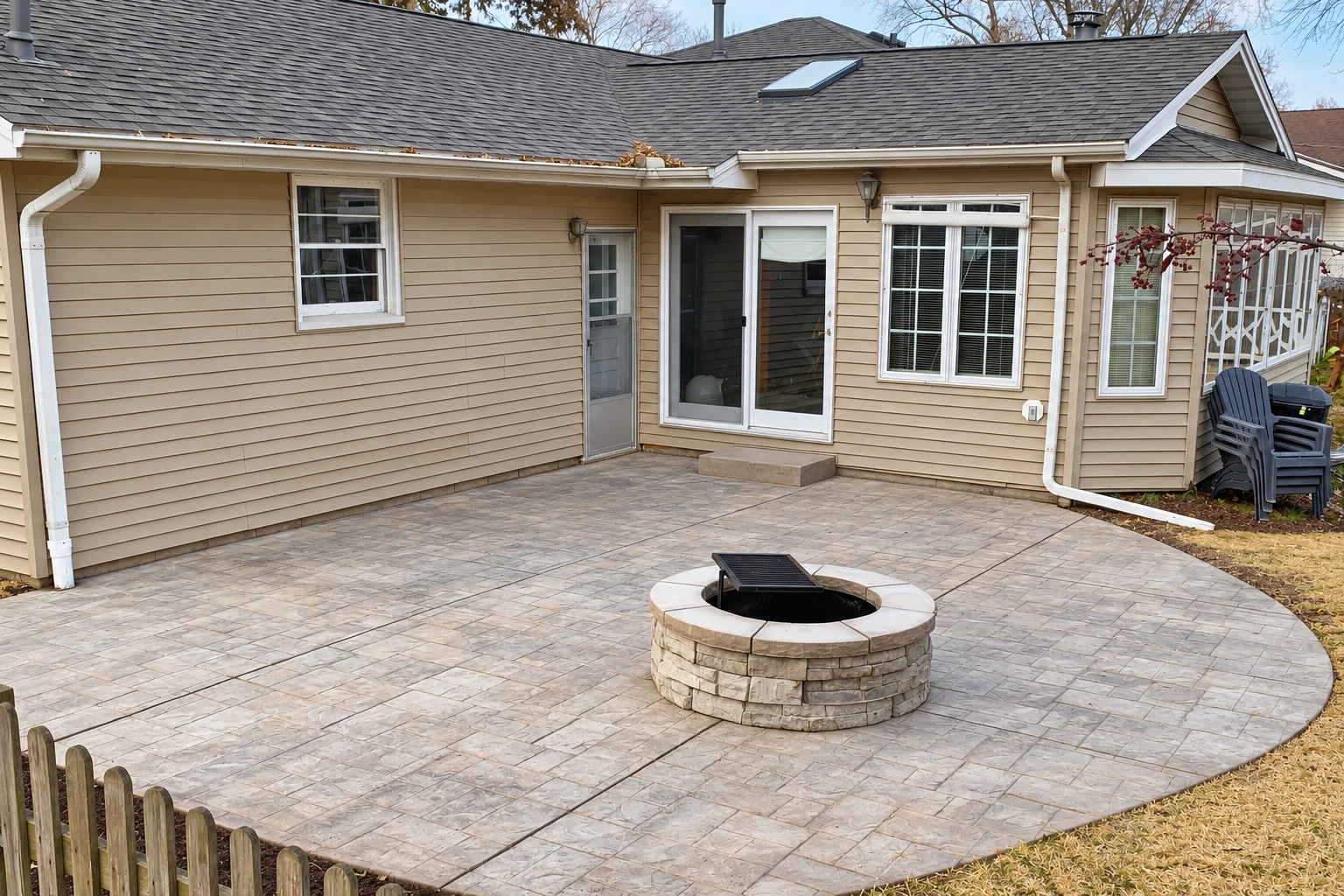
Flatwork, the flat pours like patios, walks and driveways, can be textured and colored to look like slate, brick or natural stone. You get that pattern across one slab, and we help you pick a color that suits the house.
A finished face indoors
Polishing, sealers and coatings give interior concrete a finished look instead of a bare one. They suit the floor of a room or a garage as well as a covered patio, and they make the surface easier to keep clean.
Decorative finish, plain slab or something else?
Decorative concrete is about the finish, so start with what you're building. For the floor of a room or a garage, look at concrete floor installation, and if you need to hold back a slope, concrete retaining walls come first. Color or texture can be part of either once the structure is planned.
Then pick a level. A basic design uses one pattern and one color, costs less and is easier to keep looking right. Mid-range styles add more color or texture, and high-end work with intricate patterns, several colors, borders and inlays can add curb appeal and resale value, but it costs more and needs frequent upkeep.
I lean toward the level you'll actually keep up with. A busy pattern only holds its look with regular care, so we help you match the design to your budget and the time you're willing to give it.
What to settle before we pour
Plain and decorative, side by side
I'll price a plain broom finish, the light brushed texture most walks get, next to the decorative finish for the same area and the same prep. That way the only difference on paper is the finish, and you can see exactly what the extra costs.
Base before finish
The subgrade, what the slab sits on, is hidden on day one, so it's the first thing people want to cut. I won't cut it, because we dig out and pack the base instead of raking dirt level, and a pretty finish on a settling slab still sinks and cracks.
Where the water goes
We check where the water runs before we set any forms, so the finished slab sheds rain away from your house. Color and pattern don't fix a slab that falls toward the house, so we get the slope right first.
Decorative concrete work in Baldwin Park
Baldwin Park requires a permit to build or rebuild a driveway approach, the strip of public right-of-way between your property line and the street. The city's Building and Safety Division issues building permits, and its engineering group reviews encroachment permits and grading plans. For any job, we check which office covers your address and handle the permit when one's needed.
Decorative work can go on a front driveway, a back patio or the walk that joins them. We're based in Baldwin Park and work in the cities around it, including West Covina and El Monte. Tell us how you use the space, whether cars park on it and how much sun it gets, and I'll help steer the design.
Questions people ask about decorative concrete
How much does stamped concrete cost in the Los Angeles area?
Stamped concrete in the Los Angeles area usually costs about $15 to $30 per square foot, according to one cost guide. Where your job lands depends on its size, how complex the design is and local contractor rates, and the design level you pick is a big part of that.
How often does stamped concrete need to be resealed?
Every two to three years, according to one Los Angeles cost guide, so plan on resealing as part of owning the surface. Care here mostly means protecting it from sun and wear, and the more detailed the design, the more that upkeep shows.
How soon can new stamped concrete be sealed?
One maker's guide says stamped concrete should cure for 72 hours or more before it's washed and sealed. Curing is the wait while the concrete hardens, so sealing comes as its own later step, not the same day we pour.
Will my new decorative concrete crack like my old slab did?
Concrete can still crack, but cracks usually trace back to a poor base and joints cut late or skipped. Along with the base work, we cut control joints, shallow grooves that give the slab a planned place to crack, so any crack lands where we chose instead of across your pattern.
What license does a concrete contractor need in California?
California's Contractors State License Board licenses concrete contractors and describes them as the ones who form, pour, place, finish and install pavement, flat and other concrete work. A decorative patio or driveway is that kind of work. We're licensed and fully insured.
Tell us about your decorative concrete job
Send the area's rough size, the look you want and a few site photos. We reply within one business day, and I come out for a free, no-obligation estimate.
(626) 412-8829Mon–Fri: 6 AM–11 PM, Sat–Sun: 7 AM–11 PM